
Optimizing Harmonic Mitigation in Wastewater Treatment
Segment and Application
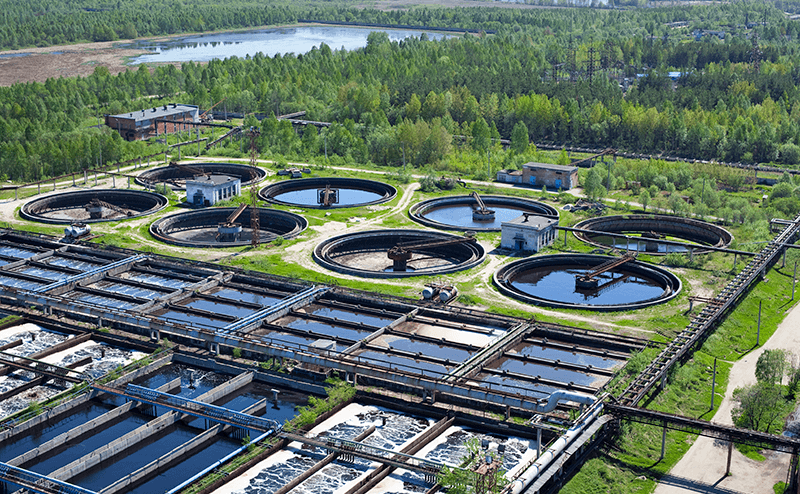 In a municipality, wastewater treatment plants typically stand out as the main consumers of electricity. The operational processes exhibit significant load variations throughout a 24-hour cycle, necessitating the use of AC drives to regulate pumps, blowers, and other motorized equipment in response to fluctuating demand.
In one wastewater treatment plant upgrade project, managing these harmonics was a critical requirement. The facility featured dozens of Variable Frequency Drive (VFD) loads across five newly installed Motor Control Centers (MCCs) totaling over 700 HP.
The Challenge
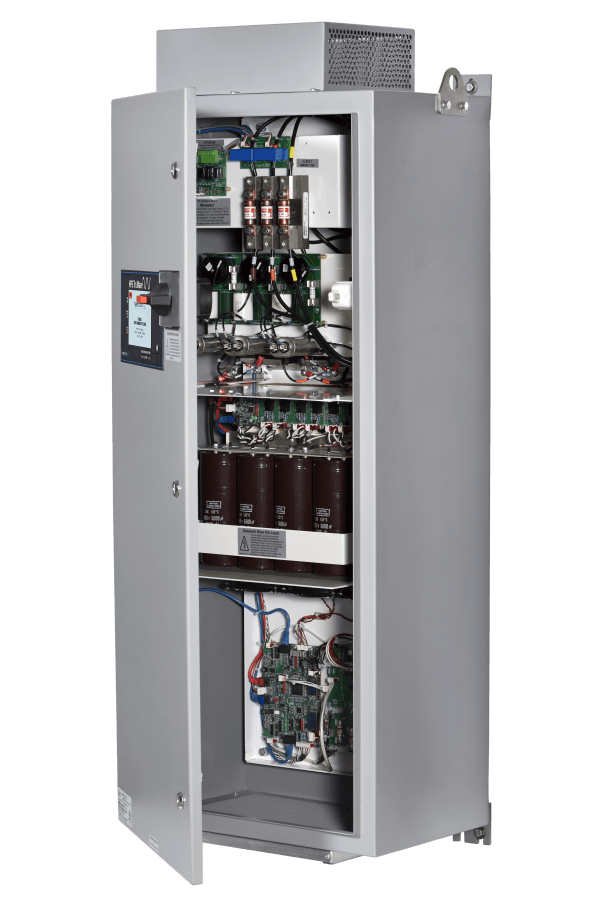 While AC drives are necessary to regulate equipment based on fluctuating demand, they introduce harmonic distortion. To meet IEEE 519 standards, the facility was required to limit Total Harmonic Distortion (THD) returned to the utility grid to less than 5%. In fact, construction on this wastewater treatment facility could not proceed unless an approved plan for harmonic mitigation was already in place.
The project was originally specified to include only line reactors and passive harmonic filters. Because space in the electrical room was tightly restricted, the project's system integrator, recommended exploring Active Harmonic Filters (AHFs) to centralize the mitigation. However, basing initial calculations strictly on the maximum total load from the project's original electrical drawings indicated a massive equipment requirement:
- MCC-2: 50 Amp Filter
- MCC-3: 100 Amp Filter
- MCC-4: 150 Amp Filter
The hardware costs required for three separate active harmonic filters heavily strained the project's initial budgetary boundaries.
The Solution
As a Rockwell Automation Technology Partner, Hammond Power Solutions (HPS) and Mesta Electronics, an HPS Company, strive to engage early in the design phase to provide the most cost- and space-efficient solutions. In January 2021, a VFD specialist from a Rockwell Automation Authorized Distributor reached out to the team regarding this project.
This early engagement enabled the engineering teams at HPS and Mesta to work directly with the distributor and system integrator to look deeper into the project parameters. Together, the teams learned that the actual operating current for the facility was 300 HP less than what the static drawings showed due to redundant loads.
One of the greatest benefits of an Active Harmonic Filter is that it only needs to be sized for what actually runs instead of the total maximum load. Active Harmonic Filters offer an efficient solution to alleviate harmonics, minimize voltage fluctuations associated with processes, and enhance the operational lifespan and capacity of equipment within the system.

HPS utilized its sizing estimation software to recalculate the actual required harmonic correction based on real-world operation. The system layout was re-engineered with an optimized footprint:
- MCC-2: Filter completely eliminated (0 Amps required)
- MCC-3: Downsized to a compact 50 Amp filter
- MCC-4: Downsized to a 100 Amp filter
The Result
By moving away from static drawings and designing for actual operating loads, the collaborative partnership delivered significant business and environmental outcomes:
- Over 40% Cost Reduction: Minimizing the number of active harmonic filters reduced the cost of harmonic mitigation by over 40%, enabling the end user to come in significantly under the initial proposed budget.
- Critical Space Savings: Eliminating one Active Harmonic Filter saved critical space in the electrical room. The two AHFs took up significantly less space than dozens of PHFs.
- Environmental Risk Mitigation: Critical harmonic distortion can cause unexpected facility shutdowns. For a wastewater plant, a power disruption risks the release of untreated or partially treated wastewater into local water bodies, threatening the surrounding environment and wildlife.
- Full IEEE-519 Compliance: The optimized solution successfully meets the IEEE-519 recommendation of putting less than 5% total harmonic distortion back on the grid.
This project highlights the strength of the Rockwell Automation partnership ecosystem. Working closely with the distributor and system integrator, Hammond Power Solutions alongside Mesta Electronics earned the network's 'Technology Innovation' Award for exceptional engineering.
More from the HPS Blog

HVAC Is Your Next Big Efficiency Win, But Mind the Power Quality - Article
After lighting retrofits, HVAC is often the biggest lever for lowering electrical bills. Adding VFDs to fans and pumps can introduce harmonics if you don’t plan for them.