
HVAC Is Your Next Big Efficiency Win, But Mind the Power Quality
After lighting retrofits, HVAC is often the biggest lever for lowering electrical bills. Many facilities are adding variable frequency drives (VFDs) to fans and pumps to cut energy use by matching the speed of motors driving HVAC equipment to actual demand. That delivers real savings, but it can also introduce harmonics and other power-quality (PQ) issues if you don’t plan for them.
The Efficiency Upside of VFDs in HVAC Systems (and What’s Realistic)
 If you’ve already upgraded your lighting and are wondering what’s next, look at your HVAC system. Heating, ventilation, and air conditioning equipment often runs constantly, but not always at full tilt. Variable Frequency Drives (VFDs) let these systems slow down when demand drops, reducing wasted energy. Instead of motors blasting air or water at one constant speed, VFDs adjust the motor speed of fans and pumps to match the real need for airflow or water flow in the building.
This simple idea, matching motor speed to actual demand, is where major savings come from. For example, the relationship between fan speed and energy use isn’t one-to-one. Power use drops roughly with the cube of speed, meaning that if a fan runs at 75% speed, it may only consume around 40% of the full-load power. That’s a big difference for something that runs 24/7.
Field studies back this up. A large-scale study by a team in New York, which examined 186 roof top unit HVAC installations across five commercial and institutional building types found that units retrofitted with advanced controls had an average energy savings of 35%, with totals ranging from 5% to 50%. Approximately 90% of those savings were directly attributable to VFD implementations.
A similar multi-year study in the Pacific Northwest showed that units retrofitted with advanced controls had energy savings of 24%-35%, resulting in cost savings of up to 38%. Heat pumps style units also saw significant energy savings ranging from 20%-60%. These, and other similar studies, demonstrate that VFDs are the primary driver of HVAC efficiency gains in real-world conditions.
These results align with findings from the U.S. DOE Uniform Methods Project, which outlines savings potential for variable‑torque applications like HVAC fans and pumps.
ASHRAE guidance also notes that careful estimation of fan or pump power draw is important to set realistic expectations. Their modeling emphasizes the correct use of power-to-speed relationships, ensuring designers don’t overstate potential gains.
If your HVAC fans or pumps spend most of their time below peak output, a VFD retrofit can save you serious energy compared to older methods like dampers or throttling valves.
The PQ Caveat: VFDs Can Introduce Harmonics
VFDs are nonlinear loads. They improve control efficiency but inject harmonic currents that can:
- Heat up transformers, cables, and motors
- Cause nuisance trips, misreads in sensitive electronics, and reduced equipment life
- Push you out of compliance with IEEE 519 voltage distortion limits at the PCC (point of common coupling) if the system isn’t designed/mitigated correctly
This can sound intimidating, but it’s important to note that the benefits of VFDs typically outweigh the PQ downsides when you design for them.
How to Get the Savings and Keep Power Clean
Here’s a starting point you can hand to your engineers and contractors: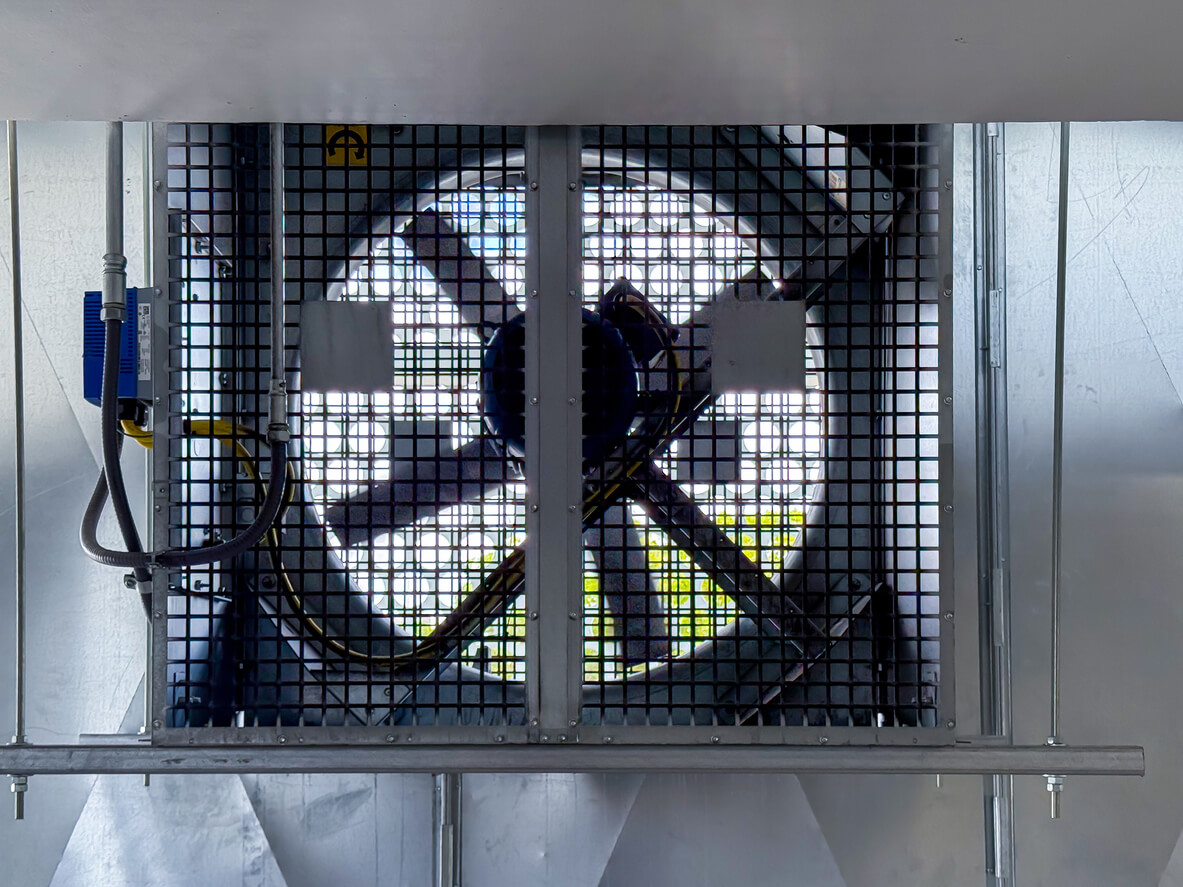
1. Start at the System Level
It can be helpful to understand how strong the electrical supply is at the point where all your equipment connects (the PCC) and how much load will be operating there. This gives a clearer picture of how VFDs and other nonlinear loads may affect overall power quality and whether additional mitigation might be needed.
2. Choose the Right Mitigation for the Job
- Line reactors are a simple, low-cost solution for moderate total harmonic distortion (THD) reduction and drive protection.
- Passive harmonic filters (PHFs) are ideal when you need deeper harmonic reduction with minimal complexity, which makes them a good solution for stable loads with predictable harmonic profiles. PHFs are a strong solution when dealing with HVAC equipment that operates in long, steady cycles like hot water circulation pumps and cooling tower fans that maintain a stable speed for long periods.
- Active harmonic filters (AHFs) are a great fit when your HVAC loads speed up and slow down throughout the day, or when several drives are interacting on the same system. AHFs actively monitor the electrical system and inject the right amount of compensation in real time, making them ideal for buildings with variable airflow demands, multiple VFDs running at once, or strict harmonic limits that need a more dynamic solution.
- Multi-pulse arrangements can push problem harmonics to higher orders but come with trade-offs in terms of footprint and cost.
3. Mind the Transformer
When you add a VFD to HVAC equipment, the drive doesn’t draw current in a perfectly smooth, sinusoidal way. Instead, it draws current in pulses. These pulses distort the electrical waveform, increasing what’s called RMS current distortion. This is essentially, extra current that doesn’t contribute to useful work but still heats up equipment.
Consider using a transformer that is specified for this duty such as a K-factor or harmonic mitigating transformer. This will help manage thermal stress and neutral currents. Based on your application it's important to consider temperature-rise and ventilation options as well.
4. Good Controls Can Unlock Extra Savings
Beyond hardware, using sensible control settings and building‑appropriate operating schedules can help HVAC systems run more efficiently overall. Even small adjustments to airflow or temperature setpoints can improve comfort while supporting the energy savings gained from VFDs.
5. Verify System Performance After Installation
It’s helpful to verify that your system’s electrical performance aligns with expectations once VFDs are installed. Checking key indicators like harmonic distortion levels and voltage quality at the PCC can highlight whether additional mitigation is needed.
Where to Expect the Best Payback
In many buildings, the best payback often comes from equipment that runs for long hours at partial load. This includes air handlers and VAV supply/return fans, which frequently operate below peak airflow; cooling tower fans and condenser fans, which modulate seasonally as outdoor temperatures change; and primary or secondary chilled- and hot-water pumps, which may have historically been throttled to control flow. All of these are classic variable-torque applications where the cubic law allows VFDs to deliver substantial efficiency gains.
Conclusion
VFDs on HVAC fans and pumps are one of the most reliable post-lighting ways to cut energy use. Independent evaluations show meaningful savings when paired with good controls. Just plan the power-quality side up front, verify harmonics at the PCC and right-size mitigation, and you’ll lock in savings without collateral headaches.
More from the HPS Blog
Optimizing Power Management with Smart Transformers - Article
As power systems become more complex and industries rely increasingly on sensitive electronic equipment, onsite power quality metering is becoming an essential tool for facility operators.