
State of the Data Center Boom 2026
Why Power Infrastructure Now Defines What Gets Built
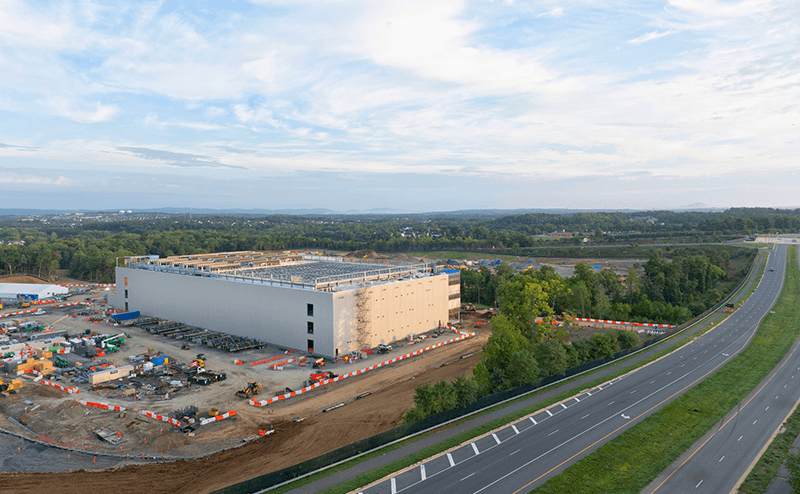 Data centers sit at the heart of the modern digital economy. Every AI query, cloud workload, streamed video, or online transaction depends on reliable, always-on infrastructure operating behind the scenes. As digital demand accelerates, data center development is expanding rapidly across North America, with the United States leading growth and Canada emerging as a compelling destination due to clean power access and favorable conditions.
But while demand continues to surge, one constraint increasingly defines what gets built and where: power.
Today, success in data center development is no longer driven solely by land, connectivity, or real estate strategy. It is driven by the ability to secure, convert, and manage electrical power reliably at scale.
Power Is No Longer Assumed
For years, power availability was treated as a given. Utilities would expand capacity, equipment could be sourced on predictable timelines, and electrical infrastructure rarely dictated site selection. That assumption no longer holds.
Interconnection delays, constrained utility capacity, and long equipment lead times are reshaping project timelines. In many regions, developers now prioritize sites based on available power first, with design and layout decisions following close behind. In constrained markets, “bring your own power” strategies including on-site generation, battery storage, and microgrids are becoming standard considerations rather than exceptions.
In short, power delivery has become the gating factor for growth.
Different Data Centers, Same Power Challenge
Not all data centers look the same, but they increasingly share common electrical challenges.
Large hyperscale and AI-driven facilities push power density and efficiency limits, requiring scalable infrastructure that can support rapid expansion. Colocation and enterprise sites demand flexibility, redundancy, and predictable performance across diverse tenant loads. Edge and distributed facilities face tighter space constraints and depend heavily on localized power quality and reliability.
Despite these differences, every modern data center must solve the same core problem: how to safely deliver clean, stable power from the grid or on-site generation to sensitive IT equipment without interruption.
Understanding the Data Center Power Chain
Power entering a data center does not flow directly to servers. It passes through a sequence of systems designed to protect equipment, ensure uptime, and maintain efficiency.
Electricity typically enters from utility and on-site power sources, flows through medium-voltage switchgear, is stepped down through transformers, conditioned by uninterruptible power systems, and distributed through power distribution units before reaching server racks.
Each stage plays a distinct role, but transformers and PDUs are particularly critical. Transformers provide voltage conversion and electrical isolation, protecting downstream systems. PDUs serve as the final distribution point within the data hall, delivering power where it is needed most.
In many modern designs, transformers are integrated directly into PDUs, placing power conversion closer to the load and supporting scalable, modular layouts.
Power Quality Is a System-Wide Requirement
As data center loads become more dynamic and power-dense, maintaining power quality has become just as important as supplying capacity. Harmonics, voltage distortion, and transient events can degrade equipment performance, increase losses, and reduce system reliability.
Power quality is not managed at a single point. It must be addressed across the entire power chain, from incoming supply through distribution and conditioning. Well-designed transformers, reactors, filters, and system architecture all play a role in protecting sensitive IT loads and supporting long-term operational stability.
Power Availability Shapes Design Decisions
Because power constraints now influence site selection, architecture, and timelines, electrical infrastructure decisions are being made earlier than ever in the design process. Developers and operators are seeking solutions that offer:
- Predictable performance under high and variable loads
- Scalability to support future expansion
- Efficiency to reduce operating costs at scale
- Reliability to protect uptime and revenue
Electrical infrastructure is no longer a background system. It is a strategic design element.
Where Hammond Power Solutions Fits
As data center power requirements evolve, Hammond Power Solutions supports customers across the power chain with dry-type transformer and power quality solutions designed for mission-critical environments.
HPS transformers support medium-voltage applications, integrate into power distribution units, and help deliver clean, reliable power closer to the load. Combined with power quality solutions, these systems help data centers improve efficiency, protect equipment, and scale with confidence.
Powering What Comes Next
The data center boom shows no sign of slowing. But in 2026 and beyond, growth will favor projects that can secure and manage power effectively.
Understanding how power flows through a data center and where infrastructure decisions matter most is now essential. As digital demand accelerates, the ability to deliver reliable, high-quality power will continue to define which facilities get built and which succeed.
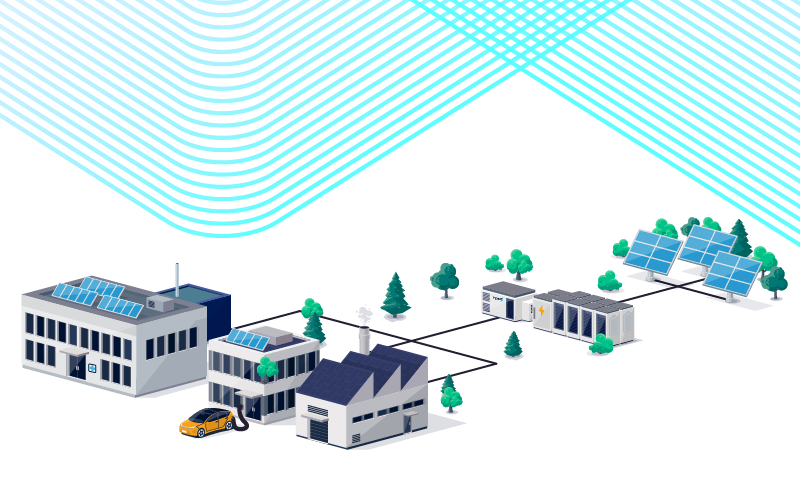
Microgrids & Power Quality: Designing Resilient, Clean Facility Power - Article
A microgrid is more than just backup, when designed properly, it becomes a platform for resiliency, efficiency, and sustainability. One of the most critical and underappreciated design challenges in microgrids is power quality.